
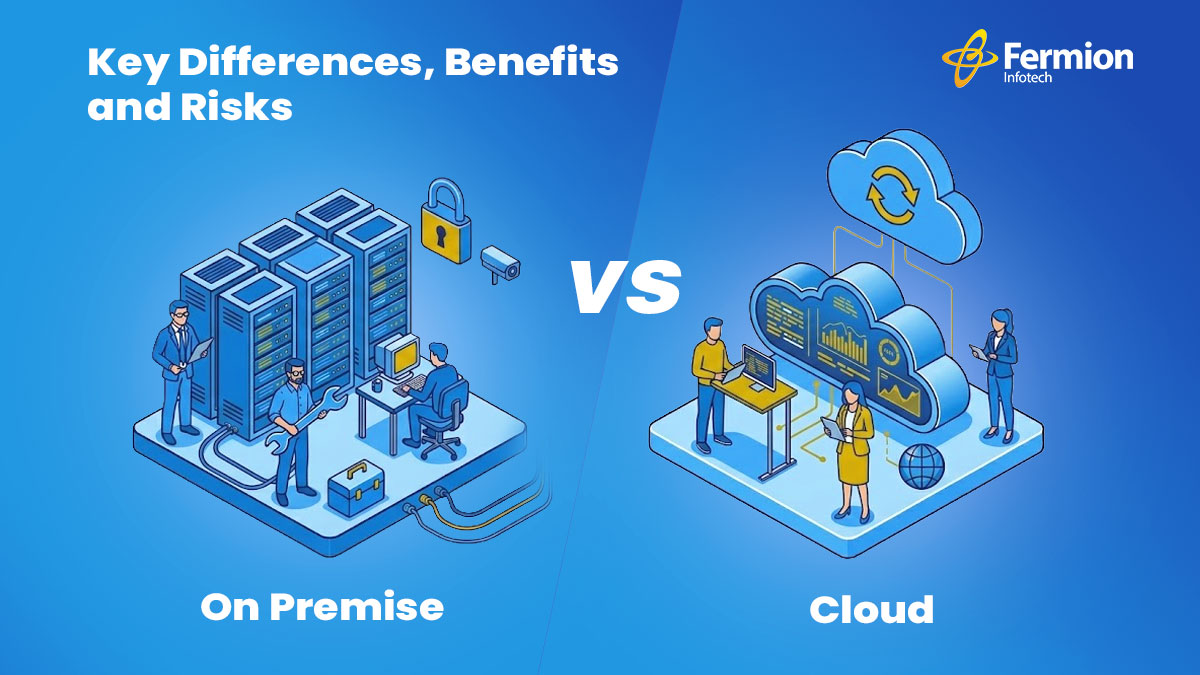
Every software project reaches a crossroads: where should your system live? On your own servers (on Premise), or in the cloud? It sounds technical, but the decision affects your budget, security, flexibility, and how fast you can grow. Let’s break it down — simply.
What are they exactly?
On Premise – You own everything
Your software runs on physical servers that you buy, install, and manage — usually in your own office or a data center. Full control, but full responsibility too.
Cloud – Someone else hosts it
Your software runs on servers managed by providers like AWS, Azure, or Google Cloud. You pay for what you use and skip the hardware headaches.
Key differences at a glance
Cost structure
On Premise — Big upfront investment. You buy servers, licenses, and pay IT staff to maintain them. It can cost less over many years if you scale carefully.
Cloud — Pay-as-you-go. No large capital expenses. You pay monthly based on usage, which is great for growing businesses but can add fast at scale.
Control & customization
On Premise — You have complete control over hardware, software, and data. Highly customizable for specific business needs.
Cloud — Limited by what the provider offers. Most enterprise needs are covered, but deep system-level customization has limits.
Scalability
On Premise — Scaling means buying more hardware. It takes time and budget.
Cloud — Scale up or down in minutes. Perfect for businesses with fluctuating traffic or rapid growth.
Maintenance
On Premise — Your team handles everything: updates, patches, hardware failures.
Cloud — The provider handles the infrastructure. Your team focuses on building, not babysitting servers.
Benefits & risks
On Premise
Benefits
Full data ownership and privacy
Works without internet access
Meets strict compliance needs
No recurring subscription costs
Risks
High upfront hardware costs
Slow to scale up or down
Needs dedicated IT team
Hardware can become outdated
Cloud
Benefits
Scale instantly with demand
Low starting cost, no hardware
Accessible from anywhere
Automatic updates & backups
Risks
Ongoing costs grow with scale
Data lives on third-party servers
Needs reliable internet
Vendor lock-in risk
So, which one should you choose?
There’s no one-size-fits-all answer. If you need full control, work with sensitive data, or must meet strict regulations — on-premise gives you that peace of mind. If you need speed, flexibility, and want to focus on building your product rather than managing servers — the cloud is your friend.
Many modern businesses go hybrid: keep critical data on-premise, and use the cloud for everything else. It’s the best of both worlds.
Not sure what’s right for your project?
We help software teams navigate infrastructure decisions and build systems that scale.