0

Beyond Allocation: The Strategic Art of the “Cheapest-to-Deliver” Asset

 In an era of Basel III/IV constraints, fluctuating interest rates, and heightened liquidity coverage ratios (LCR), how a firm manages its inventory can significantly impact the bottom line. 

While “Collateral Allocation” is a functional necessity, “Collateral Optimization” (built on the Cheapest-to-Deliver principle) is a source of competitive alpha. 

The Evolution: From “First Available” to “Best Available” 

In the legacy banking model, collateral management was reactive. Today, with the shift toward T+0 and instant settlement, it must be predictive. 

  • Collateral Allocation (The “What”): A linear, rule-based process. If a Clearing Corporation (CCIL/NCL) issues a margin call, the system identifies any eligible asset and moves it. It solves the settlement but ignores yield leakage. 
     
  • Collateral Optimization (The “How”): A multi-dimensional mathematical challenge. It evaluates the entire inventory against a matrix of haircuts, funding costs, and reinvestment yields to identify the most efficient movement of value. 

The “Cheapest-to-Deliver” (CTD) Engine 

The CTD concept, borrowed from the futures market, is the heartbeat of optimization. It refers to the specific asset that satisfies a requirement while imposing the minimum economic drag on the firm. 

To determine the CTD asset, sophisticated fintech engines calculate the true “Cost of Carry” for every security in the pool: 


By delivering the CTD asset—perhaps a State Development Loan (SDL) rather than a high-demand Benchmark G-Sec—a firm preserves its most liquid assets for higher-yielding activities like TREPS lending or satisfying regulatory buffers. 

The Strategic Value Proposition 

1. Enhanced Return on Equity (ROE) 

Every basis point saved on funding costs via CTD selection drops directly to the bottom line. By avoiding “over-collateralization” (posting higher quality assets than required), firms unlock capital that can be deployed into higher-yielding credit books. 

2. Liquidity Resilience 

Optimization provides a bird’s-eye view of “collateral velocity.” During periods of market stress, an optimized engine can automatically substitute “expensive” collateral with “cheaper” alternatives, ensuring that the most liquid securities remain available for emergency RBI windows or MSF. 

3. Operational Scalability 

Manual allocation cannot keep pace with 24/7 digital assets. AI-driven optimization automates the CTD selection process across thousands of ISDA/CSA agreements and margin pledge-repledge workflows simultaneously. 

The Intelligence Layer: AI & DLT in Real-Time CTD 

The manual “triage” of collateral is becoming obsolete. The complexity of modern markets requires an intelligence layer that processes millions of data points in milliseconds. 

  • AI-Driven Predictive CTD: Machine Learning models now analyze historical volatility and repo rate fluctuations to predict liquidity squeezes before they happen. It identifies the CTD not just for today, but for the projected lifecycle of the trade. 
  • Tokenization & Atomic Settlement: Using tokenized assets, the transfer of collateral and the updating of the ledger happen simultaneously. This eliminates the “settlement gap” where capital is often trapped and unproductive. 
  • Automated Substitution: If an asset currently posted as collateral becomes “expensive” (e.g., its market value rises or it’s needed for a high-yield trade), DLT-based systems can automatically trigger a substitution with a “cheaper” eligible asset in real-time. 

Comparison for Decision Makers 

Factor Legacy Allocation Strategic Optimization (CTD) 
Primary Driver Operational Compliance P&L Optimization 
Inventory View Siloed by Desk/Entity Centralized & Holistic 
Asset Selection “First Available” “Cheapest-to-Deliver” 
Impact Cost Center Profit Center / Alpha Generator 

The Bottom Line: Why ECLMS is Non-Negotiable 

To execute a “Cheapest-to-Deliver” strategy at scale, a banking enterprise needs a centralized nervous system. An Enterprise Collateral & Limit Management System (ECLMS) bridges the gap between high-level risk appetite and granular operational execution. 

A robust ECLMS transforms collateral from a static line item into a strategic tool through Unified Inventory Visibility: breaking down silos between repo, derivatives, and treasury desks to create a single “global pool” of assets. 

In 2026, the firms that win are those that treat collateral as a dynamic asset class. Moving to a CTD-based model isn’t just an operational upgrade—it’s a fundamental shift in capital efficiency. 

5

Credit Limits vs. Collateral: A Quick Guide

We often hear terms like credit limit and collateral when talking about loans, credit cards, or lines of credit, but what do they really mean for your financial future? 

While both are fundamental components of borrowing, they play very different roles in the lender-borrower relationship. Confusing one for the other can lead to poor financial decisions, affect your credit score, or even put your assets at risk. 

This article is your Quick Guide to understanding the distinct functions of Credit Limits and Collateral.  

Understanding Credit Limits 

Credit limits represent the maximum borrowing amount extended to a client based on their creditworthiness, assessed through factors such as credit scores, income stability, and repayment history. These are typically unsecured, relying on the borrower’s ability to repay without asset backing. In practice, they offer flexibility for revolving credit products like credit cards and lines of credit, enabling quick access to funds. 

However, in the current environment, where delinquencies in credit card and auto loans are projected to increase due to weakening consumer balance sheets, banks are tightening these limits to curb exposure. This trend aligns with broader credit market outlooks, where lower spreads and Federal Reserve easing may temper returns but heighten the need for vigilant monitoring. 

The Role of Collateral 

Collateral, in contrast, involves pledging tangible or intangible assets—such as real estate, inventory, or receivables—to secure a loan. This approach reduces lender risk by providing a recoverable asset in case of default, often allowing for higher borrowing amounts and lower interest rates. 

Amid economic resilience, driven by a strong consumer and labor market, asset-based credit (ABC) is powering ahead. Private credit and debt markets are witnessing momentum, with M&A rebounding and syndicated loans hitting records. Yet, sectors like commercial real estate face pressures from fiscal risks and rising rates, underscoring the importance of robust collateral valuation. 

Key Comparisons and Strategic Considerations 

  • Risk Mitigation: Credit limits expose lenders to higher default risks in volatile times, while collateral offers a safety net, though it requires ongoing asset monitoring. 
  • Flexibility vs. Security: Limits suit short-term, unsecured needs but can be adjusted dynamically; collateral supports larger, long-term financing but involves legal and appraisal complexities. 
  • Market Alignment: With policy uncertainties and evolving market structures, a hybrid approach—blending limits for agile consumer lending with collateral for corporate exposures—can enhance portfolio resilience. Regulatory shifts in capital requirements further influence credit supply, favoring collateralized structures in tighter environments. 

In summary, as BFSI institutions adapt to stable yet uncertain credit outlook, prioritizing collateral in high-risk segments while maintaining prudent credit limits will be key to sustainable growth.  
 
What strategies are you employing to balance these in your operations?  

6

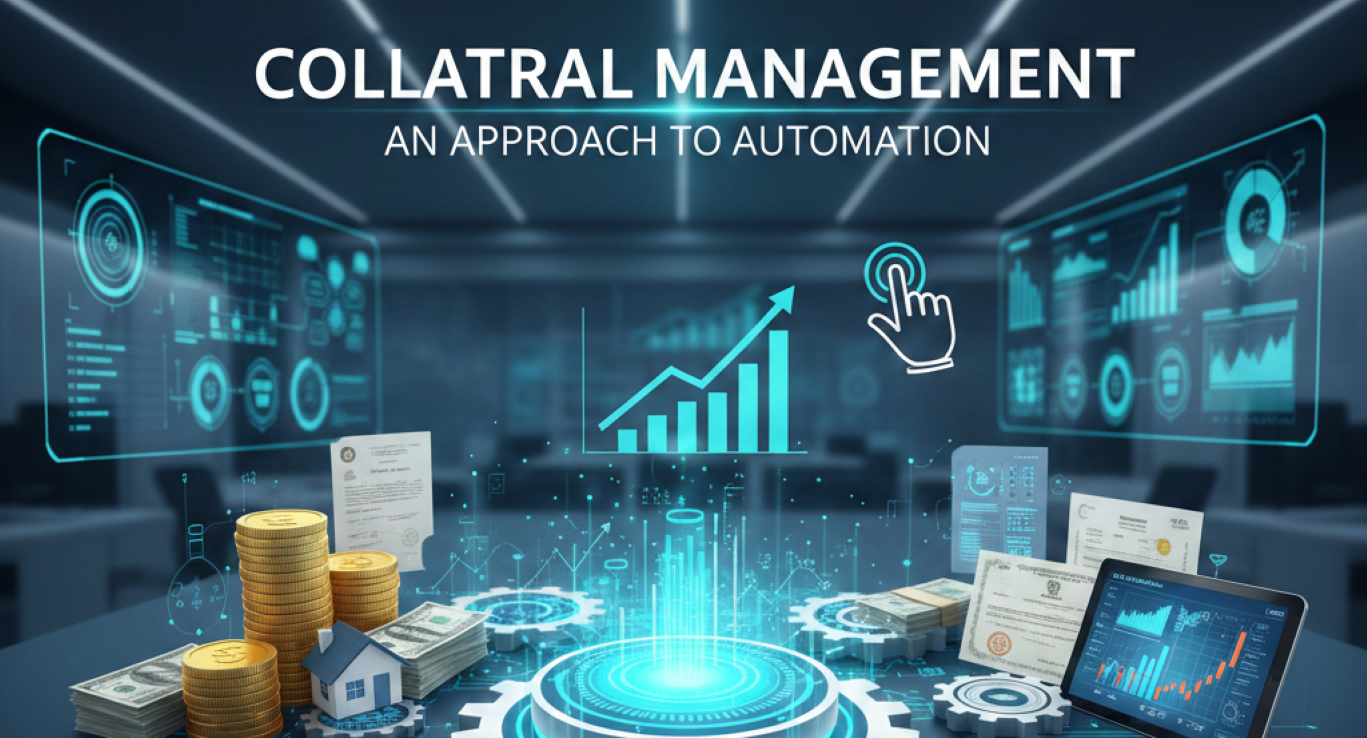
Collateral Management -An Approach to Automation – Part-1

Friends, we are starting this multi-part series to cover collateral management from a lender’s perspective and scenarios important for automating Collateral Life Cycle Management. We trust that the contents of this series will ignite thought process in the community which is predominantly manual as on date

Collaterals are the first and most important credit risk mitigate available to a lender, however, collateral management is predominantly a manual process. Considering the proliferation of digitization and automation in the financial industry, collateral management automation is still not a priority area. Our objective of this series is to bring forth the critical aspects of the collateral management process and considerations for automation of life cycle management of collaterals from a lender’s perspective.

While sanctioning a secured loan, the lenders secure collaterals under their charge using different methodologies depending on the type of collateral being created out of the lender’s funds or offered by the customer. Accordingly, the collaterals may be broadly categorized into two categories: Primary Collaterals: The asset which is created out of the funds is considered as primary collateral. Say loans given to purchase vehicles, plant and machinery etc will create assets as vehicle/ plant & machinery that will be hypothecated to the bank but will remain under the procession of the borrower. In this case, the asset created out of funds of the lender will used for use by the borrower.

Secondary Collaterals: many times lenders resort to securing their funds by taking additional collaterals which are in most cases Immovable Property. Such additional collateral is termed Secondary collaterals. Secondary collaterals serve as additional collateral coverage to the exposure of the lender and primarily the title and/ or the asset will remain in possession of the lender.

However, such categorization may become blurred in many cases like loans against customer’s FDR, Shares, NSC, KVP, Gold etc. are often considered as primary collaterals in banking parlance whereas in actual sense these are secondary collateral, since the funds given by the lender are going to be utilized by the customer for either creation of other assets or purely for expanses.

For creating a charge on the collateral offered/created needs to undergo different perfection events depending on the type of collateral, once the collateral is perfected it is available for onboarding and tagging at various levels of the limit hierarchy of the customer. Based on the tagging of the collateral at the respective limit hierarchy level, the value of the collateral is distributed among various facilities of the customer.

Post onboarding of the collateral, two important aspects need to be performed, firstly, if there is any deviation in the pre-onboarding perfection process that should be complied with at the earliest and post onboarding activities like post disbursement inspection and registration of charge with competent authority also need to be performed. The charge on the collateral is registered with the respective authority depending on the type of collateral.

Subsequently, regular maintenance like insurance, re-valuation and re-inspection are the activities that need to be carried out by the lender for upkeeping of the collateral good and realizable till the existence of the tagged exposure so that delinquency risk is mitigated.

Finally, once the loan is repaid by the customer, the collateral needs to be released (release of title documents on which the charge was created) to the customer upon due acknowledgement.

In the Next Part – Various Types of Collaterals

Author: VC Sharma

Disclaimer: The views expressed in the blog are entirely personal to the author. There is no direct/ indirect responsibility of the publisher whatsoever.

0

Technology and Digital Transformation in Collateral and Limit Management 

Ever thought about what goes on behind the scenes when banks give out loans? Especially when they ask for something as security – you know, collateral? For the longest time, this whole process in Indian banks was, well, a bit of a manual marathon. Think mountains of spreadsheets and rooms full of physical documents.  
 
But guess what? Things are finally changing, and it’s all thanks to digital transformation
 
The Good Old Days (and Their Headaches!) 

Let’s be real, managing collateral used to be a proper headache. If you pictured a bank’s back office, you might’ve seen: 

  • Spreadsheet Mania: Imagine giant, sprawling spreadsheets trying to keep tabs on everything from your granddad’s property deeds to that gold you pledged. One wrong click, and poof! Data chaos. Keeping everything accurate was a nightmare. 
     
  • Paper, Paper Everywhere: Bank vaults weren’t just for cash; they were bursting with original property papers, share certificates, and all sorts of important documents. Getting them out, checking them, and moving them around for every transaction was a slow, security-heavy dance. 
     
  • Playing Catch-Up: How much is that collateral really worth today? With manual updates, valuations were often outdated. This meant banks were often a step behind when managing risks or figuring out real values. Reconciling everything was like solving a giant, never-ending puzzle. 
     
  • Blind Spots: Want a quick overview of all the collateral a bank holds? Good luck! It took ages to pull all that info together. This made it tough to get a clear picture of risks or assets in real-time. 
     
  • Regulation Riddles: India has some pretty strict rules from the RBI. Trying to follow all those guidelines with manual processes was a constant tightrope walk, often leading to mistakes and inefficiencies. 

Honestly, this old way of doing things just couldn’t keep up with how fast Indian banking is growing. It wasted time, piled on risks, and frankly, slowed down the whole lending process. 

Hello, Digital Age! 

But here’s the exciting part: Indian banks are now fully embracing digital transformation for their collateral management. It’s not just about fancy software; it’s about fundamentally changing how they view, track, value, and use collateral. 

So, what’s cooking? 

  1. Everything in One Place: Banks are moving to smart, integrated collateral management systems (CMS). Think of it as a central hub where all collateral data lives digitally – no more hunting through separate spreadsheets! 
     
  1. Real-Time Values, No More Guesswork: These new systems can connect to live market data. So, whether it’s property prices or share values, banks get near real-time updates. This helps them stay on top of things, make quicker decisions, and manage potential risks way better. 
     
  1. Bye-Bye Paper, Hello Digital Workflow: Those physical documents? Many are getting digitized and stored securely, directly linked to your loan accounts. And the processes for creating, releasing, or swapping collateral are now automated. Less human error, more speed! 
     
  1. Smart Insights and Reports: With all that clean, digital data, banks can now use powerful analytics. They can quickly spot potential risks, understand where their collateral is concentrated, and generate all sorts of compliance reports with just a few clicks. It’s like having a superpower for decision-making! 
     
  1. Talking to Each Other: These modern CMS solutions aren’t islands. They seamlessly connect with a bank’s other systems – like the ones that handle your main bank account or process new loan applications. This means information flows smoothly, making everything more accurate and efficient from start to finish. 
     
  1. Techy Tricks Up Their Sleeves: 
  1. AI and Machine Learning: Think smart computers predicting collateral value changes or flagging anything unusual. 
  1. Blockchain: This is still a bit new, but imagine completely transparent and secure records of who owns what collateral – super cool for reducing fraud! 
  1. Digital Public Infrastructure (DPI): Concepts like the Account Aggregator are letting banks get digital consent to view your financial data, making it even easier and faster to assess collateral. 

Why This is Great News for Everyone 

Going digital with collateral management isn’t just a win for banks; it’s a win for all of us! 

  • Faster, Smoother Loans: Banks can process loans quicker, which means you get your funds faster. 
  • Better Risk Management: Less risk for banks means a more stable financial system overall. 
  • Happier Customers: Efficient processes lead to a smoother, less frustrating experience for borrowers. 
  • Smarter Decisions: Banks can make more informed choices about lending, benefiting both them and the economy. 
  • Less Paperwork (Yay!): Good for the environment, good for bank offices! 


Ready to Modernize Your Collateral Management? 

As you can see, the shift from traditional to digital collateral management isn’t just a trend; it’s a necessity for Indian banks aiming to stay competitive and secure. 

If your bank is looking to shed those old spreadsheets and embrace a truly efficient, risk-smart, and future-ready approach, then it’s time to explore ECLMS: Enterprise Collateral and Limit Management System. 

ECLMS isn’t just software; it’s a comprehensive solution designed specifically to tackle the complexities of collateral and limit management in the Indian banking landscape. It helps banks: 

  • Automate the entire collateral lifecycle: From initial onboarding and valuation to monitoring, release, and disposal. 
     
  • Get a 360-degree view: Consolidate all collateral and limit data for a holistic picture across your entire enterprise. 
  • Proactively manage risk: With real-time exposure tracking and automated alerts for limit breaches and collateral value changes. 
     
  • Ensure seamless compliance: Stay effortlessly aligned with RBI regulations and internal policies. 
     
  • Optimize capital and resources: By efficiently allocating collateral and preventing over or under-utilization. 

ECLMS empowers banks to transform their credit risk management, enhance operational efficiency, and accelerate their lending processes. It’s the strategic advantage you need to thrive in today’s dynamic financial environment. 

Curious to learn more about how ECLMS can revolutionize your bank’s collateral and limit management?  
 
Reach out to us today for a demo!