
0

The “Liquidity Trap” of 2026 – Moving from Static to Real-Time Collateral 

For decades, the term “Liquidity Trap” belonged to the world of macroeconomics—a scenario where rock-bottom interest rates fail to stimulate growth because everyone is hoarding cash. But as we move through 2026, a new, more technical version of this trap has emerged within the plumbing of global finance. 

As institutional demand for intraday liquidity skyrockets, the industry is reaching a tipping point. The transition from static to real-time collateral management is no longer a “nice-to-have” digital transformation project; it is a survival requirement. By leveraging tokenization, programmable smart contracts, and unified API ledgers, the financial world is finally learning how to melt these frozen pools of capital. 

The 2026 Dilemma: Why the “Trap” is Structural 

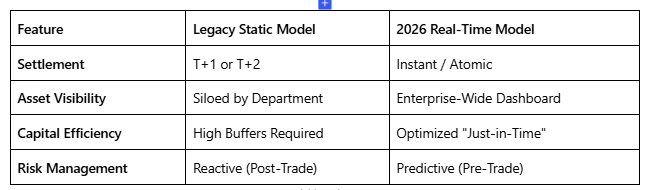
Historically, a liquidity trap was defined by consumers hoarding cash. In 2026, the trap is operational. Our financial ecosystem is moving toward T+0 settlement and real-time payments (via UPI and CBDC-W), yet our collateral remains locked in legacy, “static” silos. 

  • The “Idle Asset” Tax: Thousands of crores in high-quality liquid assets (HQLA) sit idle because valuation and movement happen in batches, not beats. 
  • The LCR Squeeze: New RBI regulations effective April 1, 2026, mandate stricter haircuts on Level 1 HQLA. This means banks must work their assets harder just to maintain the same Liquidity Coverage Ratio (LCR). 
  • Operational Friction: In a volatile market, the time lag between a margin call and the mobilization of collateral is no longer just an inefficiency—it’s a systemic risk. 

The Pivot: From Static to Real-Time Collateral 

To break the trap, we must shift the institutional mindset. Collateral should no longer be viewed as a “back-office safety net” but as a strategic liquidity engine. 

1. Tokenization of Real-World Assets (RWAs) 

The RBI’s Unified Markets Interface (UMI) has paved the way. By tokenizing Government Securities (G-Secs) and even corporate debt, banks can move “fractions” of collateral instantly. 

Strategic Edge: Tokenized collateral allows for intraday liquidity—allowing you to borrow for three hours rather than twenty-four, significantly lowering funding costs. 

2. AI-Driven Inventory Optimization 

With “Agentic AI” moving from pilot to production in 2026, banks are now using autonomous agents to scan global and domestic inventory in real-time. These systems automatically select the “cheapest to deliver” asset for any given margin requirement. 

3. Real-Time Valuation & Margin Calls 

Static daily marks are being replaced by streaming valuations. For NBFCs and private banks, this means the ability to release collateral the moment market moves in their favor, rather than waiting for the end-of-day (EOD) cycle. 

The Competitive Advantage for Indian Banks 

India is uniquely positioned to lead this shift. With the Digital Rupee (Wholesale CBDC) maturing, the “atomic settlement” of collateral—where the asset and the payment swap simultaneously—is now a reality. 
The Mandate  

 We must collaborate to: 

  • Dismantle Silos: Consolidate collateral held across derivatives, repo, and SLR desks. 
  • Invest in API-First Infrastructure: Ensure your core banking system can “talk” to external tokenization platforms and the RBI’s UMI. 
  • Re-evaluate Haircuts: Use real-time data to negotiate better terms with counterparties, proving the high quality and mobility of your digital assets. 

 
Escaping the Trap: The Strategic Path Forward 

The 2026 Reality: In a high-speed market, the most asset isn’t just the one with the highest rating—it’s the one that is most mobile. 

This is where ECLMS becomes the mission-critical infrastructure for the modern bank. By providing a single source of truth for all customer credit data and real-time exposure tracking, ECLMS doesn’t just manage collateral—it unlocks it. It automates the entire lifecycle from onboarding to revaluation and release, ensuring that your capital is never “trapped,” but always optimized.  
0

Surviving (and thriving) in the Age of Real-Time Payments 

Ten years ago, a payment between two banks could take 1–3 business days. Today, in many countries, money moves in 10 seconds or less, 24 hours a day, 365 days a year. Systems like UPI in India, Pix in Brazil, FedNow in the USA, and SEPA Instant in Europe have made real-time payments the new normal. 

Why Real-Time Payments Change Everything for Liquidity 

  • No more “float” In the old batch world, banks knew exactly when money would leave and arrive. They could use the 1–2-day float to earn interest or invest short-term. That float is now gone. 
  • 24/7/365 outflows Customers can now move money on Friday night, Saturday morning, or Christmas Day. Your liquidity has to be ready at 3 a.m. on a public holiday. 
  • Instant visibility = instant reactions When a large corporate pulls ₹500 crore at 11:55 p.m., you see it immediately — and so do your regulators and rating agencies. 
  • Higher intraday swings Studies show that intraday payment volumes can be 5–10 times higher than end-of-day net positions in real-time regimes. 

The New Rules of Liquidity Management 

Here are the practical steps successful banks and fintechs are taking today: 

1. Move from “End-of-Day” to “Real-Time” Treasury 

Old way: Look at balances once a day at 6 p.m. 

New way: Monitor positions continuously (every 5–15 minutes or even second-by-second). 

Tools that help: 

  • Real-time dashboards 
  • Treasury management systems (TMS) connected directly to the Real-Time Payments rails 
  • API-based position keeping 

2. Build Bigger and Smarter Buffers 

You need more high-quality liquid assets (HQLA) than before because: 

  • Outflows are unpredictable in timing 
  • Central bank standing facilities may be closed on weekends/holidays 

Many banks have increased their intraday liquidity buffers by 50–100% after moving to real-time. 

3. Pre-fund Nostro Accounts Strategically 

In cross-border real-time (e.g., SWIFT GPI, Ripple, or upcoming systems), you often need to pre-fund accounts in multiple currencies and time zones. Smart banks: 

  • Use AI to predict daily and hourly funding needs per currency 
  • Keep “just-enough” instead of “as-much-as-possible” 

4. Use Intraday Liquidity Tools from the Central Bank 

Many central banks now offer: 

  • Intraday credit (sometimes collateralized, sometimes uncollateralized) 
  • Open repo facilities 24/7 Make sure your operations and collateral teams are ready to use them instantly. 

5. Automate Liquidity Transfers 

Top performers use: 

  • Standing instructions and rules engines that move money automatically when balances cross thresholds 
  • “Liquidity bridges” between payment systems (e.g., RTGS, Fast payments, CBDC when it comes) 

6. Stress Test for the New Reality 

Old stress scenarios (“What if 5 big corporates leave at day-end?”) are not enough. New questions: 

  • What if 30% of salary credits hit at 00:01 on the 1st of the month? 
  • What if a viral social Real-Time Payments campaign moves ₹1000 crore in 30 minutes? 

7. Turn Liquidity into a Product 

Some forward-thinking banks are now offering “Instant Liquidity as a Service” to corporate clients and fintech partners — charging a small fee for guaranteed 24/7 availability. 

The Winners and the Strugglers 

Winners are: 

  • Banks that invested early in real-time treasury platforms 
  • Neobanks that were “born” in real-time and never had legacy batch thinking 
  • Fintechs that partner with banks for funding while offering better customer experience 

Strugglers are: 

  • Banks still running end-of-day Excel sheets 
  • Institutions that treat real-time payments as “just another payment rail” instead of a fundamental business model change 

Final Thought 

Real-time payments are not a technological upgrade. They are a complete rewrite of how money, risk, and customer expectations work. 

The banks and fintech’s that treat liquidity management as a 24/7, data-driven, automated capability will win the next decade. 

Those that keep managing collateral and limits with end-of-day spreadsheets, emails, and manual approvals will slowly (or suddenly) run out of cash—or breach their regulatory limits—at the worst possible moment. 

This is exactly why leading institutions are now moving to a single platform that: 

  • Tracks collateral pledges, haircuts, and eligibility in real time 
  • Monitors intraday limits across payment systems, currencies, and counterparties (including central bank intraday credit) 
  • Automatically blocks or warns before a payment would breach LCR, NSFR, or internal risk limits 
  • Optimizes collateral usage across intraday liquidity facilities, repo markets, and clearing systems 24/7 
  • Gives treasury, risk, and operations one live truth instead of 15 different reports 

 
Building or upgrading a real-time enterprise collateral & limit management system? We at SmitApps Technologies help banks and fast-growing fintech’s do exactly that—live, automated, and regulator-ready.  
 
Drop us email at [email protected]   if you’d like to see it in action. 

3

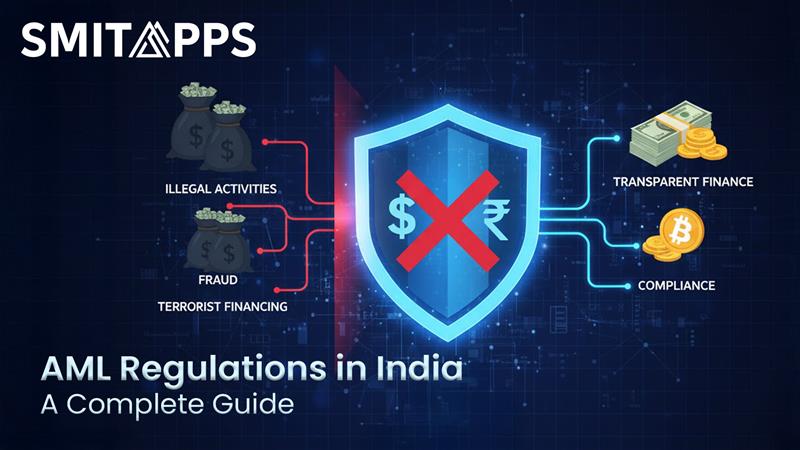
AML Regulations in India: A Complete Guide

For the growing Fintech companies in India, following the rules to stop illegal money (Anti-Money Laundering, or AML) isn’t just a suggestion—it’s absolutely necessary to stay in business.

What is AML and Why Does It Matter for Fintech? 

AML stands for Anti-Money Laundering. It’s a set of laws and steps to stop people from turning “dirty” money (from crimes like drug dealing or fraud) into “clean” money that looks legal. For fintech companies—like those handling payments, loans, or crypto—this is huge. You deal with digital money moves, which can be fast and hard to track. Breaking AML rules can lead to big fines, lost trust, or even shutdowns. In India, strong AML helps keep the economy safe and meets global standards. 

India’s AML system started getting serious in the early 2000s to fight rising frauds. Today, it’s updated often to handle new tech like apps and virtual assets. 

A Quick History of AML in India 

India’s main AML law is the Prevention of Money Laundering Act (PMLA) from 2002. It lets the government investigate, seize dirty money, and punish offenders with jail time (3-7 years, or up to 10 for drug crimes) and fines. Over the years, changes have made it stronger: 

  • 2005: Rules for keeping records and reporting odd transactions. 
  • 2009: Better sharing info with other countries. 
  • 2012: Added checks for politically important people (PEPs) and non-profits. 
  • 2015: Defined who must report and follow rules. 
  • 2023: Big updates for crypto and virtual assets, plus stricter checks for owners and pros like accountants. 

In 2025, things are building on these. For example, new agreements between agencies help share info faster to catch issues early. 

Who Runs AML in India? 

Several groups watch over AML to keep things tight: 

  • Financial Intelligence Unit-India (FIU-IND): The main hub. They collect reports on weird transactions, analyze them, and share with police or other countries. Fintech must register here if dealing with virtual assets. 
  • Reserve Bank of India (RBI): Sets rules for banks, NBFCs (non-bank lenders), and payment apps. Their KYC (Know Your Customer) guide is key for checking users. 
  • Securities and Exchange Board of India (SEBI): Handles stock markets and investments, making sure brokers and funds follow AML. 
  • Insurance Regulatory and Development Authority of India (IRDAI): For insurance firms, focusing on stopping laundering through policies. 
  • Enforcement Directorate (ED): Investigates and seizes assets tied to crimes. 

These teams work together. In 2025, FIU-IND signed deals with RBI (April) and the National Housing Bank (January) for better info sharing. This helps fintech spot risks quicker. 

The Core Laws and Rules 

The PMLA is the big one, but it comes with rules and guides: 

  • PMLA 2002: Defines money laundering as hiding crime money. It covers banks, fintech, real estate, lawyers, and more. 
  • PML Rules 2005 (Updated 2023): Say you must keep transaction records for 5 years, check customer details, and report suspicious stuff. 
  • RBI’s KYC Master Direction 2016 (Updated 2025): This is your go-to for user checks. Latest changes in August 2025 add stronger due diligence, Aadhaar face checks, and help for people with disabilities. It also covers occasional big transfers (over ₹50,000) and international wires. 
  • Other Laws: Things like the Unlawful Activities Prevention Act (for terror funding) and Foreign Exchange Management Act tie in. 

For fintech, if you’re into crypto, you’re a “reporting entity” since 2023. You must follow full AML like banks. 

What Fintech Companies Must Do 

As a fintech, you’re a “regulated entity” or “reporting entity.”  
 
Here’s what you need: 

  1. Know Your Customer (KYC): Check who your users are. Use IDs like Aadhaar, PAN, passport. Do video KYC for digital sign-ups. Rate users as low, medium, or high risk based on their background, location, and activity. 
  1. Customer Due Diligence (CDD): Dig deeper for high-risk users. Find out who really owns the account (beneficial owners—people with 10-25% control). Update checks every 2-10 years by risk level. 
  1. Transaction Monitoring: Watch for odd patterns, like big sudden transfers or links to risky countries. Use AI tools to spot issues. 
  1. Reporting
  1. Cash Transaction Reports (CTR): Tell FIU-IND about cash deals over ₹10 lakh. 
  1. Suspicious Transaction Reports (STR): Report anything fishy within 7 days—no delays! 
  1. Keep records for 5 years. 
  1. Risk Assessment: Do your own checks on ML/TF risks yearly. Train staff and have a top officer handle AML. 
  1. For Crypto and VDAs: Register with FIU-IND, do full KYC, monitor trades, and report. Tax is 30% on gains, 1% at source. 

Breaking rules? Fines up to ₹5 lakh or more, plus jail or asset grabs. In 2024, FIU fined Binance ₹18.82 crore and Paytm ₹5.49 crore for slips—lessons for 2025. 

Latest Updates for 2025 

India’s AML is evolving fast: 

  • RBI KYC Changes: In June and August 2025, RBI boosted inclusivity with easier checks for low-risk users and face auth on Aadhaar. Deadlines for old merchants to comply by December 31, 2025. 
  • Lower Ownership Thresholds: SEBI dropped it to 10% for spotting real owners. 
  • FATF Praise: India’s 2024 review was good, but watch for high-risk areas like crypto. 
  • Data Privacy Tie-In: New Digital Personal Data Protection Act rules (drafts open till Feb 2025) link to AML for safe data handling. 

Fintech must also follow UN sanctions and freeze assets tied to terror or weapons. 

Best Practices for Your Fintech 

To stay safe: 

  • Use auto-tools for KYC and monitoring—think AI for alerts. 
  • Train your team often on new rules. 
  • Do internal audits and fix gaps fast. 
  • Partner with compliant vendors only. 
  • Balance user ease with strong checks, like quick video KYC. 

This cuts risks and builds trust. 

Challenges and What’s Next 

Fintech faces hurdles like fast tech changes (e.g., decentralized finance) and cross-border deals. But India aims to innovate while staying secure. Look for more AI in regs and global team-ups.  

Wrapping Up 

AML in India isn’t just boxes to tick—it’s about protecting your business and users. Follow PMLA, RBI guides, and report on time to avoid trouble. If you’re a fintech, talk with experts or use tools for easy compliance. Stay updated, as rules change quick!  

2

The Financial Risks of Sticking with Outdated Banking Technology 

In an era where technology continually reshapes how we live and work, the banking industry is no exception. Yet, many banks still rely on outdated systems, hoping to avoid the complexity and cost of change. While it might feel easier to stick with what’s familiar, the financial risks of holding onto old banking technology are growing—and they’re hard to ignore. 

  
One critical example of innovative technology reshaping the sector is the Enterprise Collateral and Limit Management System (ECLMS)—a modern solution designed to streamline and secure collateral management and credit limits across institutions. 
 

Why Outdated Technology Costs More Than You Think 

At first glance, using legacy systems might seem like a cost-saving move because it avoids the upfront expense of an upgrade. But the reality is different. According to Deloitte, banks can end up spending as much as 70% of their IT budgets just to maintain their older systems. That means less money is left for improving services or adopting new technology that customers expect today.  
 
The hidden cost? Inefficiencies, slower processes, and mistakes that can hurt both the bank and its customers. 

Security Risks: A Growing Threat to Banks 

Security isn’t just a buzzword; it’s a lifeline. Old software and aging infrastructure often have gaps in protection that hackers love to exploit. IBM Security’s 2023 report showed that banks using outdated technology are facing data breaches costing roughly $6.5 million per incident—almost double the cost for those with modern security setups. And it’s not just money at stake. A data breach can absolutely wreck a bank’s reputation and shake customer confidence, making recovery tough and expensive. 

Trouble Meeting Regulations 

The financial world is heavily regulated for good reasons. Banks have to follow strict rules about how they handle data, prevent fraud, and report suspicious activity. But older systems aren’t always designed to keep up with changing laws, like the European Union’s GDPR. Banks that can’t update their systems quickly risk big fines and legal headaches. The EU has already handed out fines totaling over €1 billion related in part to outdated compliance systems. 

Losing Customers to More Agile Competitors 

Today’s bank customers are more digitally savvy than ever. They want fast, easy access to their money and personalized services on their phones. According to McKinsey, more than half (56%) of banking customers globally prefer digital-only banks—which tend to have the newest technology. Banks stuck on old platforms run the risk of watching their customers go elsewhere for a better experience. 

But It’s Not Always Easy to Change 

Of course, shifting away from legacy technology isn’t simple. Smaller banks may not have the resources or expertise to make big tech investments quickly. Migration projects can be complex and sometimes disruptive. Still, many technology experts agree that the long-term cost of doing nothing usually outweighs the short-term challenges of upgrading. 

The Bottom Line 

The truth is, outdated banking technology isn’t just an inconvenience; it’s a financial liability. Between high maintenance costs, growing cybersecurity threats, regulatory risks, and the expectations of today’s customers, clinging to old systems could put a bank’s survival at risk. For banks looking to stay competitive and secure, embracing modern technology like ECLMS isn’t just smart—it’s essential. ECLMS offers a comprehensive, agile platform for managing collateral and credit limits efficiently, ensuring compliance, reducing risk, and enhancing customer trust in a digital-first world. 

6

Collateral Management -An Approach to Automation – Part-1

Friends, we are starting this multi-part series to cover collateral management from a lender’s perspective and scenarios important for automating Collateral Life Cycle Management. We trust that the contents of this series will ignite thought process in the community which is predominantly manual as on date

Collaterals are the first and most important credit risk mitigate available to a lender, however, collateral management is predominantly a manual process. Considering the proliferation of digitization and automation in the financial industry, collateral management automation is still not a priority area. Our objective of this series is to bring forth the critical aspects of the collateral management process and considerations for automation of life cycle management of collaterals from a lender’s perspective.

While sanctioning a secured loan, the lenders secure collaterals under their charge using different methodologies depending on the type of collateral being created out of the lender’s funds or offered by the customer. Accordingly, the collaterals may be broadly categorized into two categories: Primary Collaterals: The asset which is created out of the funds is considered as primary collateral. Say loans given to purchase vehicles, plant and machinery etc will create assets as vehicle/ plant & machinery that will be hypothecated to the bank but will remain under the procession of the borrower. In this case, the asset created out of funds of the lender will used for use by the borrower.

Secondary Collaterals: many times lenders resort to securing their funds by taking additional collaterals which are in most cases Immovable Property. Such additional collateral is termed Secondary collaterals. Secondary collaterals serve as additional collateral coverage to the exposure of the lender and primarily the title and/ or the asset will remain in possession of the lender.

However, such categorization may become blurred in many cases like loans against customer’s FDR, Shares, NSC, KVP, Gold etc. are often considered as primary collaterals in banking parlance whereas in actual sense these are secondary collateral, since the funds given by the lender are going to be utilized by the customer for either creation of other assets or purely for expanses.

For creating a charge on the collateral offered/created needs to undergo different perfection events depending on the type of collateral, once the collateral is perfected it is available for onboarding and tagging at various levels of the limit hierarchy of the customer. Based on the tagging of the collateral at the respective limit hierarchy level, the value of the collateral is distributed among various facilities of the customer.

Post onboarding of the collateral, two important aspects need to be performed, firstly, if there is any deviation in the pre-onboarding perfection process that should be complied with at the earliest and post onboarding activities like post disbursement inspection and registration of charge with competent authority also need to be performed. The charge on the collateral is registered with the respective authority depending on the type of collateral.

Subsequently, regular maintenance like insurance, re-valuation and re-inspection are the activities that need to be carried out by the lender for upkeeping of the collateral good and realizable till the existence of the tagged exposure so that delinquency risk is mitigated.

Finally, once the loan is repaid by the customer, the collateral needs to be released (release of title documents on which the charge was created) to the customer upon due acknowledgement.

In the Next Part – Various Types of Collaterals

Author: VC Sharma

Disclaimer: The views expressed in the blog are entirely personal to the author. There is no direct/ indirect responsibility of the publisher whatsoever.

0

Open Banking and Risks. Were you aware of this? 

BFSI players can leverage Open Banking and APIs to their advantage while safeguarding customer data, maintaining compliance, and driving innovation in the financial sector. While Open Banking and APIs offer great potential for innovation and convenience in the BFSI industry, they also come with inherent risks that need to be carefully managed. Here are some key ones: 

Data Security and Privacy: 

  • Increased attack surface: Open APIs create more entry points for hackers to access sensitive financial data. 
  • Data breaches: Third-party providers (TPPs) accessing data could be compromised, leading to leaks and unauthorized access. 
  • Accidental data exposure: Human errors or misconfigurations in API implementation can lead to accidental data exposure. 

Regulatory Compliance: 

  • Complex compliance landscape: Banks need to comply with various regulations regarding data sharing, user consent, and security, which can be challenging with Open Banking. 
  • KYC/AML risks: Verifying the identity and Anti-Money Laundering (AML) checks for TPPs add complexity and potential for fraud. 

Business Model Disruption: 

  • Commoditization of services: Open APIs can make core banking services accessible to new players, potentially eroding traditional banks’ competitive edge. 
  • Loss of customer relationships: If customers migrate to TPPs for specific services, banks may lose valuable customer data and engagement. 

Other Risks: 

  • Third-party risk management: Assessing and monitoring the security and reliability of TPPs requires robust due diligence processes. 
  • Operational complexity: Implementing and managing Open Banking infrastructure requires significant investment and ongoing maintenance. 
  • Lack of trust and transparency: Some customers may be hesitant to share their data due to privacy concerns and lack of transparency in data usage. 

However, the risks can be mitigated with these strategies: 

  • Robust security measures: Employ strong encryption, authentication protocols, and regular security audits. 
  • Strict data governance: Implement clear data access controls, consent management, and data usage policies. 
  • Thorough TPP vetting: Conduct rigorous due diligence and ongoing monitoring of TPPs’ security and compliance practices. 
  • Customer education and transparency: Clearly communicate data sharing practices, privacy policies, and customer control mechanisms. 
  • Investment in technology and compliance: Allocate resources to build secure and compliant Open Banking infrastructure. 

While the open banking landscape might seem like a thrilling tightrope walk, remember, you don’t have to navigate it alone. With the comprehensive risk management solutions, you can transform the thrill into a smooth, controlled ascent, reaching new heights of innovation and customer satisfaction.